Lukáš Havrda – between brutalism, history and pop culture
Lukáš Havrda is a prominent representative of the emerging generation of painters. His work is based on a distinctive style that combines traditional realist technique with contemporary themes and bold imagination.
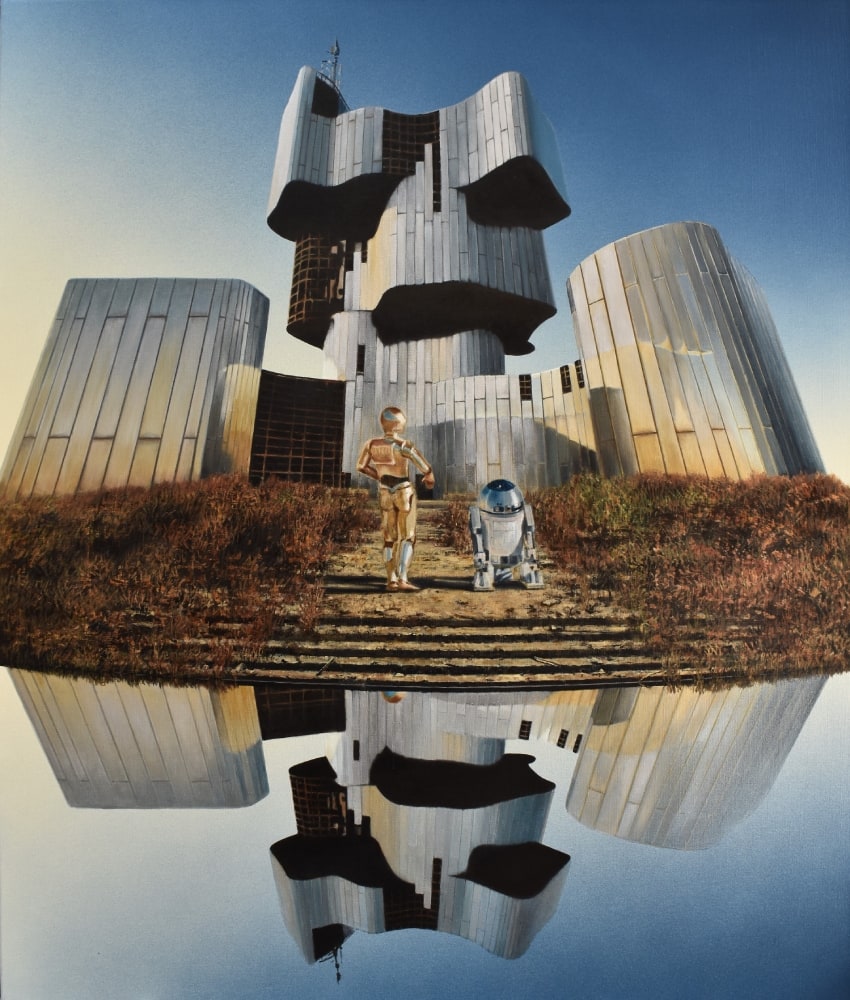
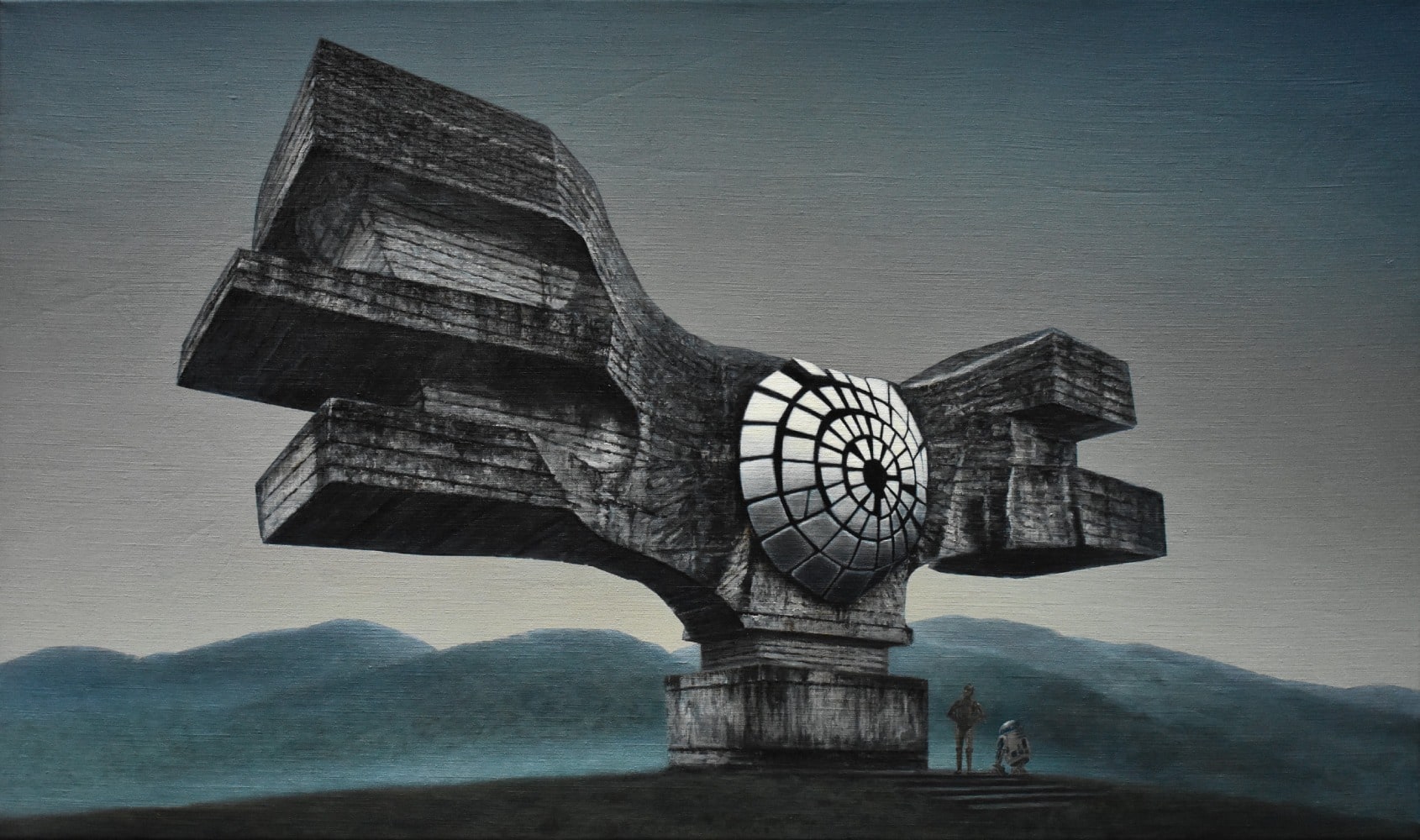
His work is characterised by the raw structures of brutalist architecture and buildings with turbulent histories from the normalisation era. Yet Havrda does not limit himself to “socialist architecture” – he deliberately seeks out places that prompt debate, whether in terms of urban planning, public space or historical memory. His canvases thus feature now almost forgotten structures, transformed into silent witnesses of their time and placed in compositions that combine different periods and are factually impossible.
Architecture is not his only subject, however. Havrda draws primarily on his own experiences, memories and ideas, and also finds inspiration in pop culture. His works therefore move between personal expression, historical commentary and visual fantasy that joins reality with fiction.
10 questions for Lukáš.
1. What does the theme of speed and movement mean to you?
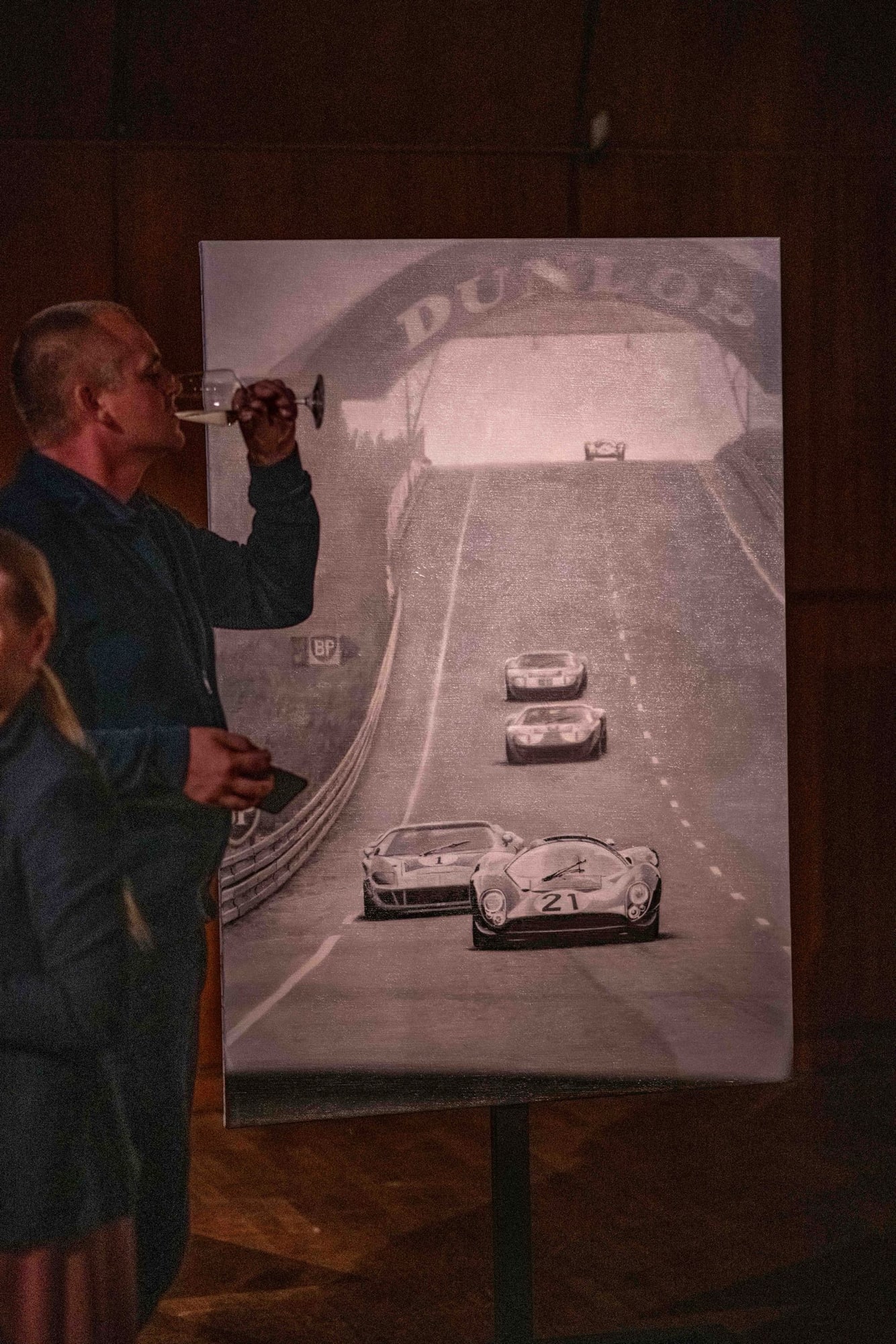
For me, capturing people or machines in motion on canvas through painting is a challenge.
2. How do you reflect on the relationship between art and the motoring world?
Do you see this dialogue as aesthetic, conceptual or rather historical and cultural? Definitely aesthetic and historical and cultural.
3. What makes the Speed Art exhibition unique for you?
The confrontation between the subject and the artwork created from it.
4. Has the theme of sport or motorsport ever influenced your work?
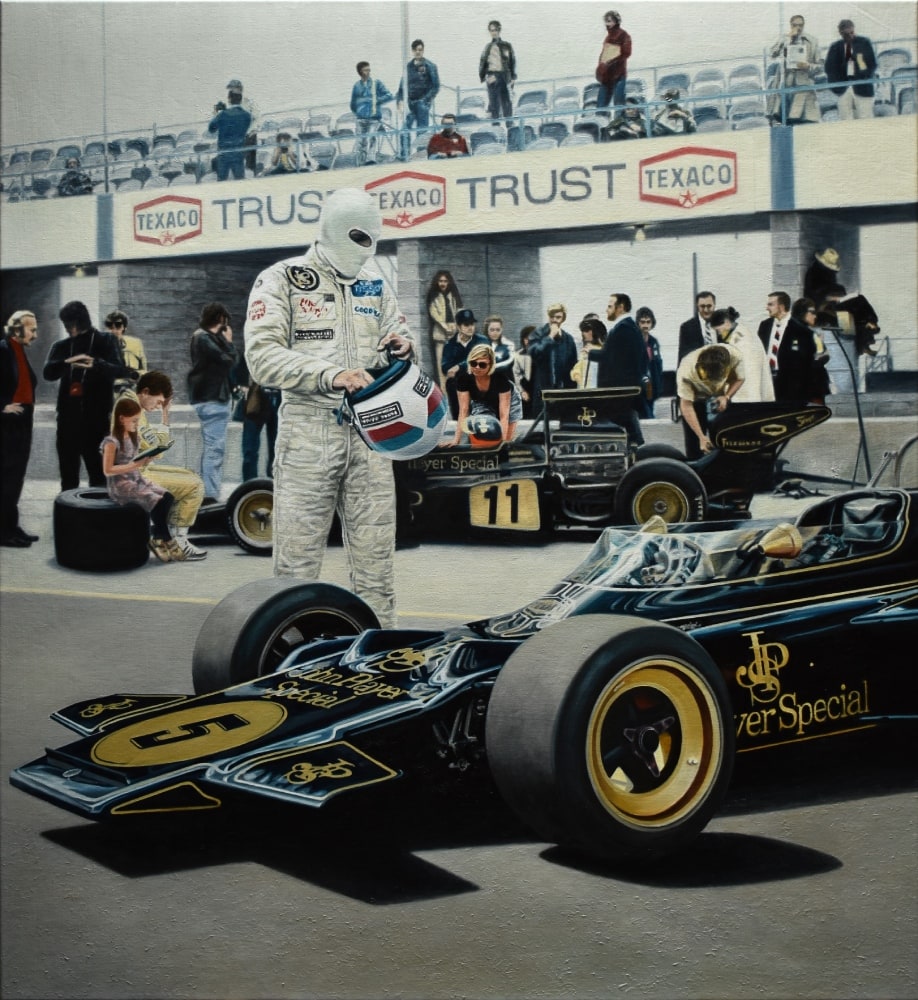
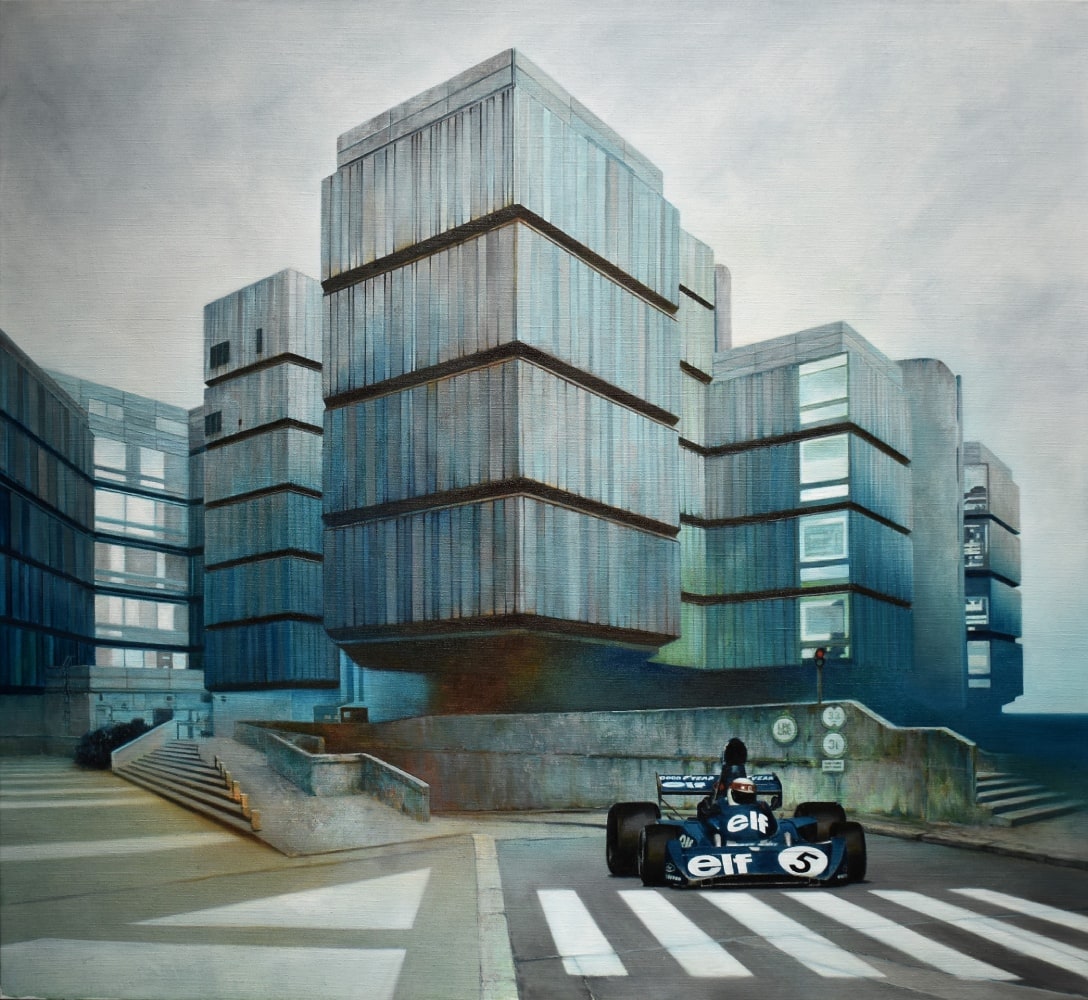
Among my grandfather’s belongings, I discovered notebooks he kept with clippings from period motoring newspapers and magazines. They were full of old articles and photographs from Formula 1, described by journalists of the normalisation era as a decadent Western sport concerned only with money, not people. The context and photographs inspired me. I used some of them as references for factually impossible compositions, and gradually a new series of oil paintings emerged.
5. Who do you consider a prominent figure in the art world working specifically with motorsport?
Theodor Pištěk.
6. What is your favourite “DREAM CAR” and which automotive designer?
Porsche 911, and designers Erwin Komenda, Marcello Gandini, Giorgetto Giugiaro, the Bertone studio, etc.
7. Do you see your work in the Speed Art exhibition as an individual statement, or rather part of a broader dialogue with the other exhibiting artists?
It is an individual statement, and I am curious how the other artists will approach this challenge.
8. Which racing driver do you consider the most significant figure in motorsport?
It is impossible to point to just one driver; there are many. Aerton Senna was one of the most successful in motorsport’s premier discipline, Formula 1, and also helped advance the sport in terms of safety.
9. How do you view current tendencies in art in the context of technological progress?
Does this development influence your own artistic thinking? I tend to look to history and draw inspiration from it.
10. What are you currently working on, and where can people see you?
I am continuing a series in which I connect the seemingly unconnectable – brutalist architecture and the world of Formula 1 in the 1960s and 1970s. Visitors can see one painting on this theme in the Senate of the Parliament of the Czech Republic, where a group exhibition entitled RYCHLEJI, VÝŠE A KRÁSNĚJI is currently taking place. Until 2 November, you can visit PORSCHEART at Galerie Desítky in Vratislavice, an exhibition dedicated to the 150th anniversary of Ferdinand Porsche’s birth. Among works by leading artists, you will find an oil painting of the green Porsche 911 Carrera from the Scandinavian series Most, which I created for this occasion this summer.