
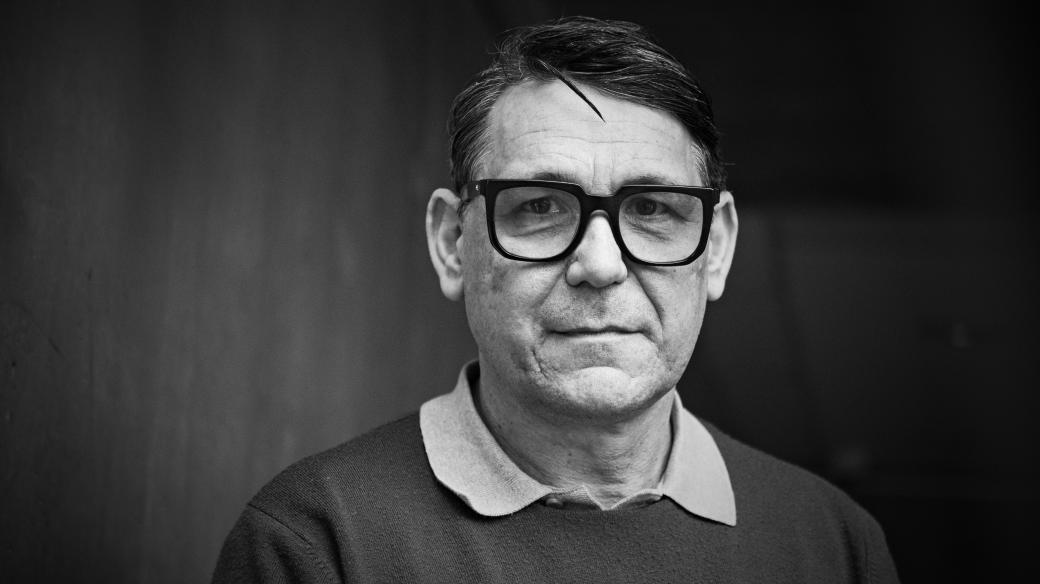
Pavel Kopřiva creates multimedia objects and installations, working with glass, photography and video art.
His work combines a conceptual approach with ironic distance, fiction and mystification, often reflecting experiences of post-industrial or post-totalitarian society.
In an interview for Speed News, the multimedia artist discusses his fascination with technology, Speed Art and why he would go to Dakar to sketch snapshots.
1. What does the theme of speed and movement mean to you?
I am generally a fan of technology and movement. I come from the industrial region of northern Bohemia, so I like everything connected with machines and industry. Moving machines, not just cars, are wonderful evidence of human ingenuity. I am fascinated by people’s ability to bring dead material such as iron to life and set it in motion using electricity. My art is shaped by this experience and fascination with technology.
2. How do you reflect on the relationship between art and motoring? Do you see this dialogue as aesthetic, conceptual or more historical and cultural?
I see this relationship as aesthetic and conceptual. Car design is a wonderful reflection of its era: shapes reflect, among other things, society’s mood and taste.
3. What makes the Speed Art exhibition unique for you?
I am interested in connections at the boundaries of disciplines. Art and motoring may seem far apart, but Speed Festival shows that the distance is not so great. Speed Art challenges artists and offers a chance to recall past movements and seek connections between technology and art with a passion like that of the Futurists.
4. Has sport or motorsport ever influenced your work?
Motorsport has not influenced me directly; I prefer live horses at the races to horsepower under the bonnet. I must admit I enjoy the colours of sporting events. Formula 1 races have a great atmosphere and colourful mood.
5. Who do you consider a prominent artist working specifically with motorsport?
Everyone probably thinks of Theodor Pištěk’s wonderful paintings, but I would like to mention sculptors such as Otto Gutfreund or Otakar Švec’s work Motocyklista (Motorcyclist).
6. What is your favourite “DREAM CAR” and automotive designer?
The rounded shapes of cars from the 1930s and 1950s are wonderful, but I love brute force. I prefer off-road vehicles and trucks. My father was a professional driver at a mine, and I spent my childhood in the cabs of almost every socialist-era truck. My fondest memories are of the Tatra 148 Mix version, which he drove most often. I discovered that its cab was designed by Bohumil Bek, an engineer at Tatra Kopřivnice. The Tatra 148 is not my dream car, though: I would like to own the legendary wartime Willys MB and Ford GPW.
7. Do you see your work at Speed Art as an individual statement or as part of a wider dialogue with the other exhibiting artists?
My work at Speed Art will be an individual statement and will certainly be a spatial sculptural work.
8. Which racing driver do you regard as the most significant figure in motorsport?
My connection with trucks explains my interest in the Dakar Rally. I always watch the broadcasts and would happily go with a support crew as a documenting artist. I could draw snapshots of the bivouac or the start. Yes, I would enjoy that. Racing in harsh natural surroundings appeals to me. If I must name a motorsport personality, it is Karel Loprais. In the 1980s I followed the Czech crews’ successes and loved the cars aesthetically. Again, it is those colourful liveries that fascinate me.
9. How do you see current trends in art in the context of technological progress? Does this development affect your own artistic thinking?
Technology is important in my art. I work in new media art and lead the interactive media studio at FUD UJEP in Ústí nad Labem. I find the arrival of computers, the internet and electronics refreshing for art. Electricity and programming bring my installations to life. A moving object interests me more than a static sculpture. When contemporary art is influenced by other fields, such as natural sciences or astronomy, it always stirs stagnant waters. Environmentalism is a powerful theme today, and we must think critically about technological development in motoring and robotics as well.
10. What are you working on now, and where can people see you?
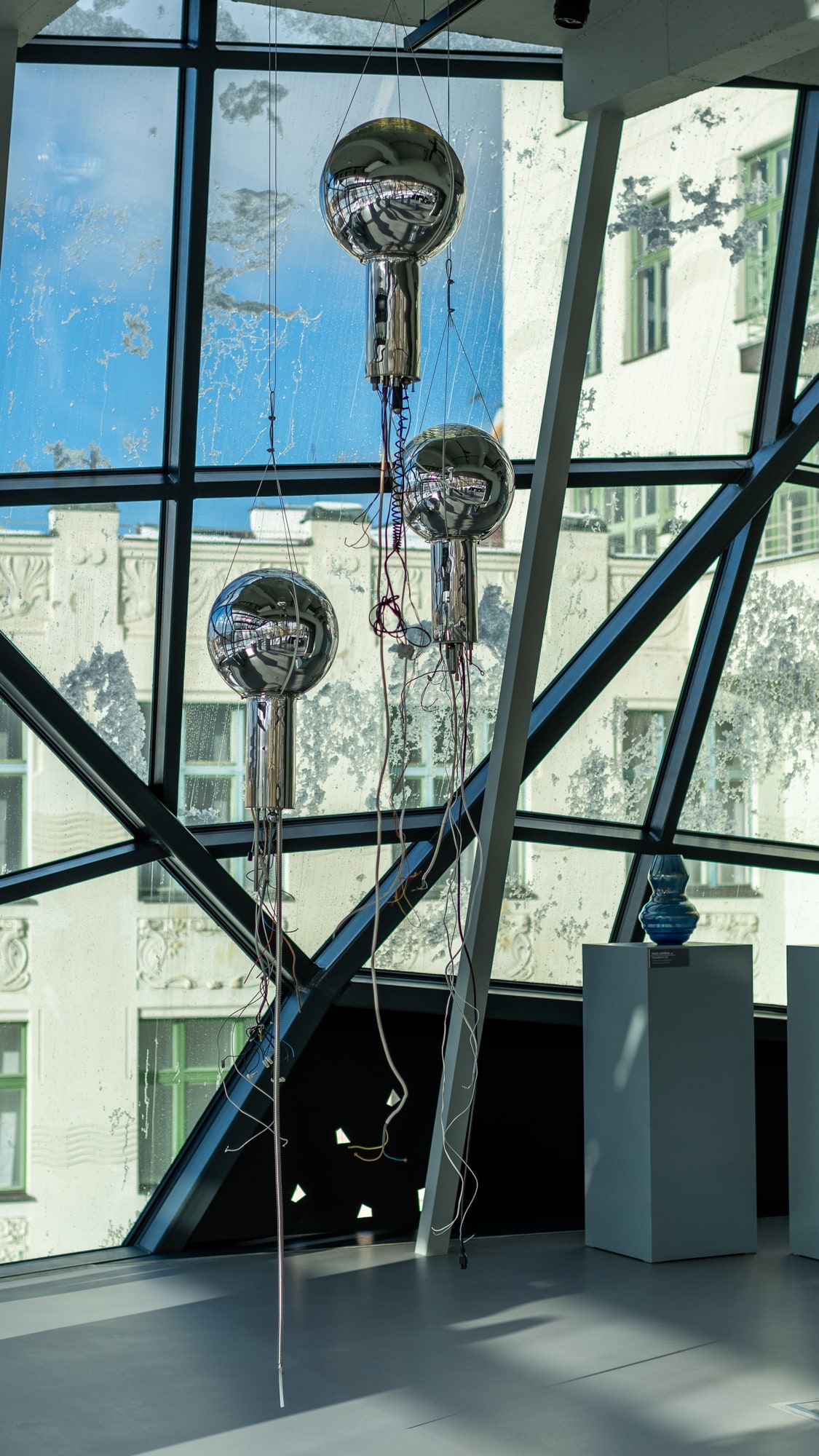
I am currently working on objects combining metal and glass. I still love silvered and otherwise metal-coated glass because it looks like mercury. Our large joint exhibition recently ended at the Museum of Glass and Jewellery in Jablonec nad Nisou, featuring my work alongside that of my wife Karolína and son Pavel. I have been invited to a glassmaking symposium in Železný Brod in mid-June, so you can meet me there. Otherwise I spend most of my time at the glassmaking school in Kamenický Šenov.
Doc MgA Pavel Kopřiva PhD
2025