
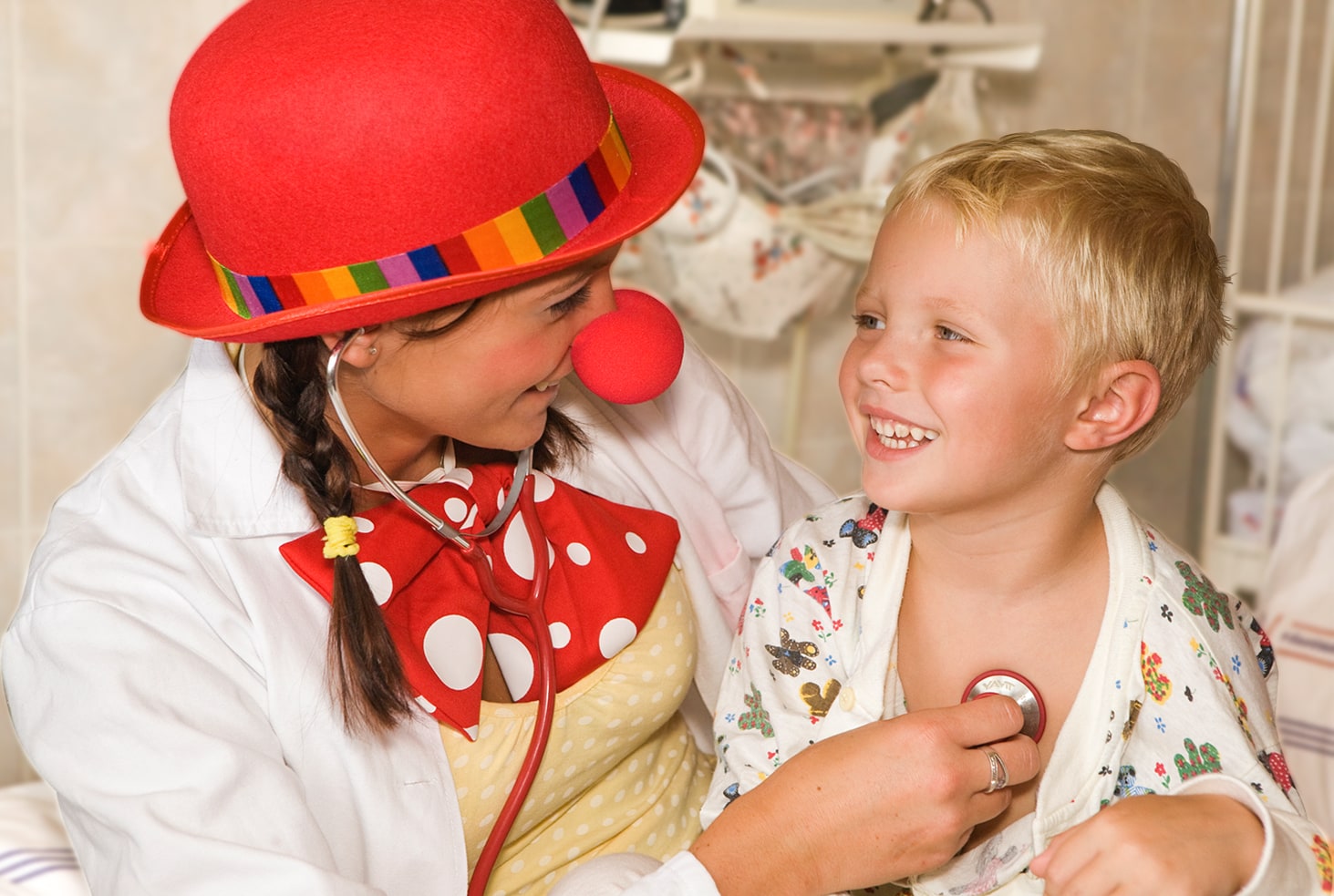
The clowns you know from hospital children’s wards, care homes and hospices have been organised since 1999 by the Chance 4 Children foundation. It is among the longest-running non-profit organisations in the Czech Republic and depends on donations from the public.
Years ago, I met the founders of the foundation Chance 4 Childrem. Their dedication, transparency and focus on the Czech Republic and vulnerable groups whose circumstances arose through no fault of their own and who cannot change them themselves resonated with me.
Naturally, I also wanted to visit various children’s wards in hospital. Everywhere, “Dr. Klaun” is invaluable.
Of course, I wanted to discover all its activities and understand everything, including what it is like to sell magnets and clown noses to hurried people on the street to raise funds for the clowns’ work. Soon afterwards, I began connecting the foundation with major events and festivals.
Naturally, I also wanted to visit various children’s wards in hospital. Everywhere, “Dr. Klaun” is invaluable. A clown can wonderfully “heal” frightened children in pain who fear examinations, injections and sometimes even kind nurses: a magic trick with a syringe, perhaps involving the staff, suddenly turns a terrifying situation into fun. There is no need to doubt the proven influence of mental well-being on recovery speed. The clowns receive regular training in improvisation, empathy, sensitivity and responding to each situation and atmosphere according to children’s individual needs.
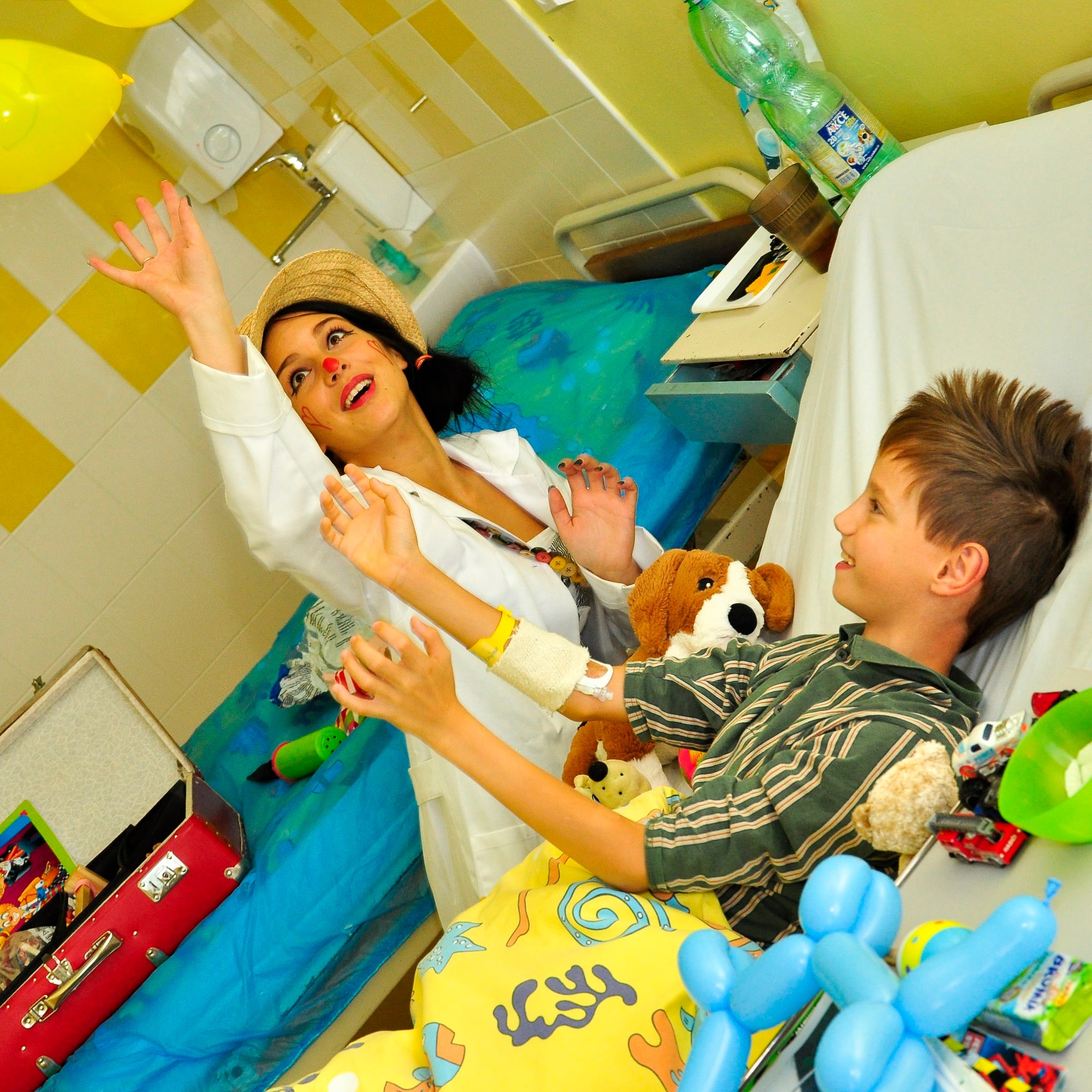
For some children’s wards, such as neurology and psychiatry, quieter creative activities are also suitable, such as “Colourful Play”, where children paint or make crafts. For a long time, I also visited the nearby Oliva Children’s Treatment Centre to help children create through art therapy.
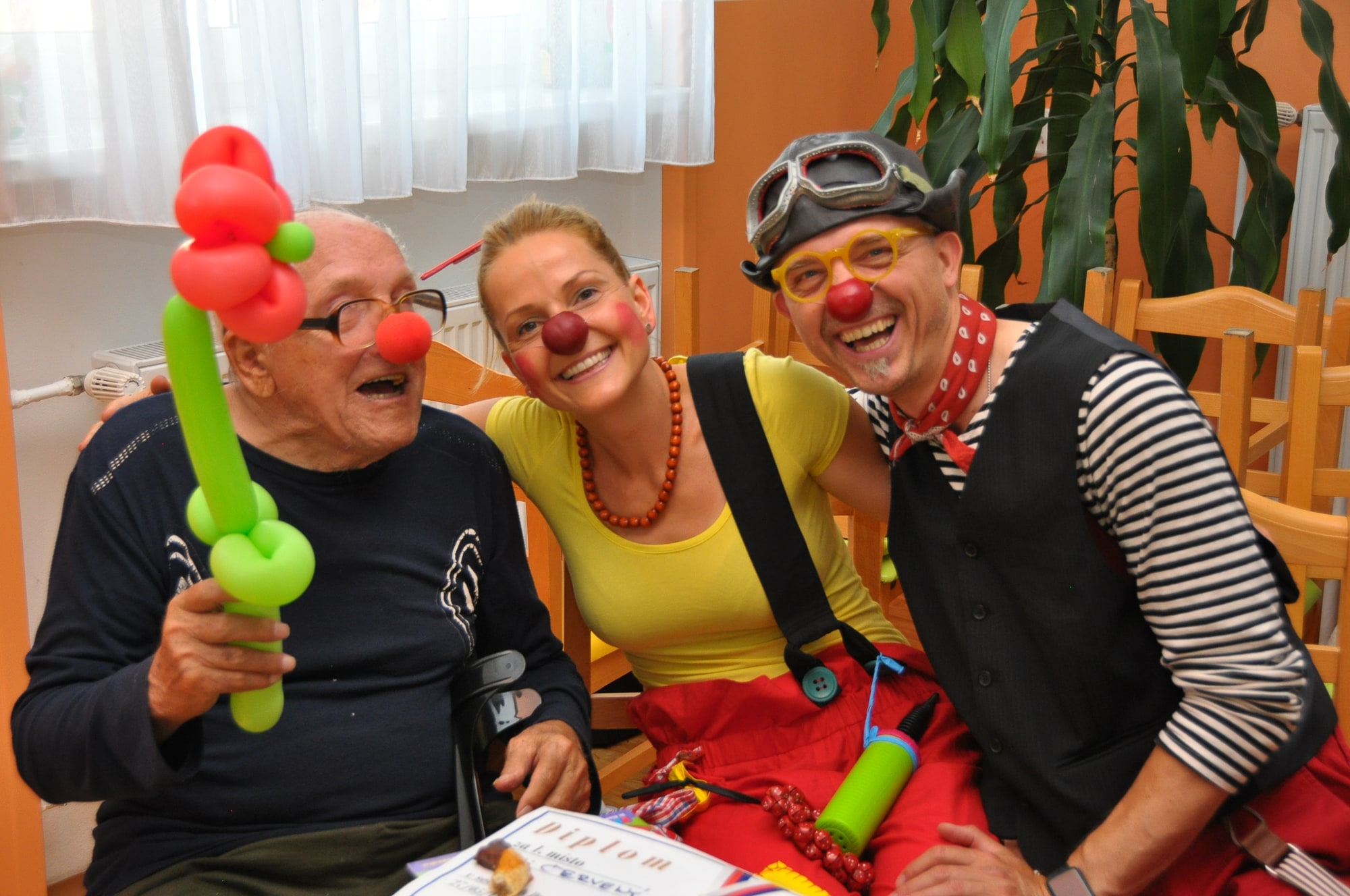
Another group is older people in care homes and hospices. This is close to my heart. Seeing rooms with several, sometimes ten, beds occupied by people dozing or quietly staring at the ceiling is powerful. In some places, televisions or radios would disturb others, so they have none. Perhaps just one person has biscuits and a family photograph on the bedside table; the others have only a child’s bottle they can drink from while lying down. But when a cheerful clown enters and softly plays songs from their youth on a ukulele, their eyes become alert and their mouths begin humming. To me, it feels like a small, almost tangible miracle! Even if all that remains after the visit is a balloon flower, dog or donated clown nose, the humming, good mood and anticipation of the next visit linger. This is precisely why working for the foundation makes sense to me. It drives me through the occasional frustration of rejection from people who have never seen this.
The third group is children in children’s homes. They arrive through no fault of their own and are often traumatised to varying degrees by their circumstances. It is hard for them and their carers. The foundation therefore supports them too, both materially, through companies supplying free products such as Danone, Vans, SC Johnson and Alza, and above all with knowledge, social skills, courses and practical experience. It even provides contacts for future employment opportunities, crucial after they leave care. This improves their prospects for finding their place and fulfilment in life.
I know children’s homes are often looked down on, but a child placed there because of drugs, parental crime, neglect or even parents’ deaths is truly not to blame. They must cope with family trauma, the large group they now live in and ultimately the hardest part: standing on their own feet at eighteen without family support. We too can help them escape the vicious circle, so they do not soon end up on the street and enter a cycle of crime.
Having worked for years with most Czech children’s homes and knowing carers’ circumstances, the foundation has also developed programmes for carers, such as the “Helper” programme accredited by MŠMT, to help combat the very common problem of burnout and similar issues.
The foundation also connects children in care who need a kind grandmother and grandfather with care homes that welcome the joyful spark of children, benefiting both sides.
Manfred Franke founded Chance 4 Children in 1997, a few years after moving from Germany with his wife and five children and visiting a nearby children’s home. In 1999, the US-inspired Dr. Klaun project followed. Since then, further activities for various vulnerable groups have developed.
Since its founding, the foundation has distributed hundreds of millions of crowns towards its activities. Its work is checked by regular audits.

100,- a month can help fund a weekly Dr. Klaun visit to children in hospital or older people in a care home or hospice.
150,- a month can help fund vocational education chosen by a child in a children’s home
Thank you for opening your hearts and helping those who cannot help themselves. For me, humility, compassion, gratitude and love can work the greatest miracles.
Radka Vojtíšková
fundraising & marketing
Chance 4 Children